
William Reynolds
Because we know you love our fABLEd episode we thought we’d throw you back to the episode we dropped in May about Changelings and have brought back our classics expert Will Reynolds to talk about why such an ancient myth may have persisted well into the 19th century.
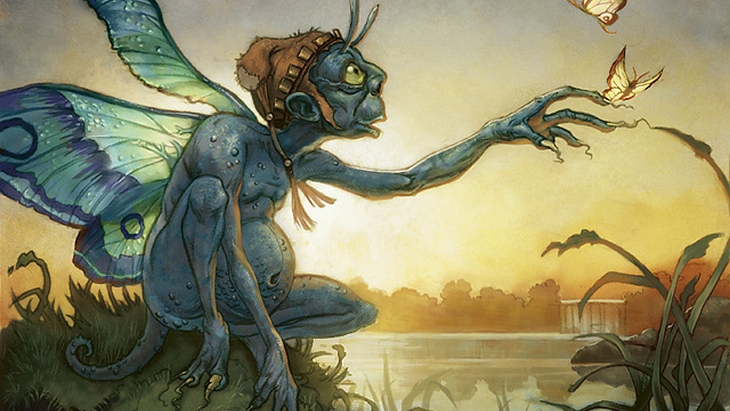
Changelings are everywhere in Indo-European myth. There is an instance in the Aeneid (C19-29BCE) by Virgil, Ascanius the son of Aeneas the Epic Hero and protagonist of the Aenied was replaced by Cupid on the orders of Juno. This is just one example of a switch of a child of a leader and is a way of gaining power over the powerful. This is an early and ancient example of the mythology of changelings, and how long standing and wide ranging it is.
There is also the idea in the Scandinavian mythology that Trolls thought that it was more respectable to have their children raised amongst Humans, which is why they would replace the human child with a Troll . It is widely believed in the Norse tradition that Trolls, or beings from the subterranean realms are scared or harmed by Iron. Which led to the practice of having an iron tool, like scissors or a knife above the cradle of an unborn child. The thing that is also really common in all indo-European examples of changelings is that the best way to have your child returned is to abuse the changeling, by whipping them. Or even putting them in an oven. This is particularly disturbing when you consider that a lot of this comes about because it is believed that the child is unbaptised. Which means this is a practice that was in place when Christianity was in place in scandinavia, which happened between the 8th and 12 centuries CE. This in turn suggests that superstition was being used alongside religion, and the importance it held was so powerful that it meant that parents would happily brutalise their own children. The fact that these were likely to be disabled and the idea of the changeling was an explanation of that disability, is truly shocking. This abuse of disabled children is similar to the Spartan practice of leaving disabled children to die of exposure on the side of a mountain. The fact that the attitude to disability as so unnatural that it must be eradicated has not changed from 4th century BCE to the 12th century CE and even later. This really when you look at it is just ancient eugenics, which is chilling really isn’t it.
But it’s not all bad news! (it mostly is bad news, but this bit is nice). In one Swedish tale, the human mother is advised to brutalize the changeling so that the trolls will return her son, but she refuses, unable to mistreat an innocent child despite knowing its nature. When her husband demands she abandon the changeling, she refuses, and he leaves her – whereupon he meets their son in the forest, wandering free. The son explains that since his mother had never been cruel to the changeling, so the troll mother had never been cruel to him, and when she sacrificed what was dearest to her, her husband, they had realized they had no power over her and released him. The lesson here is that men are pricks and shouldn’t be in charge (FUCK THE PATRIARCHY). And don’t cook the perfectly nice Troll exchange student kid who’s just trying to learn about other cultures. Trolls are chill, give them a break.
The weird thing with this for me, as Lucy said, is the conditions that are likely to mean that you would be ‘replaced’ by a changeling includes Hydrocephalus and Cerebral Palsy, both of which I have. So I definitely would’ve been stolen by the Trolls or the Fairies. Particularly when you consider that a physical attribute of hydrocephalic babies (when untreated with a shunt) is that they have an extremely large head. Cue me being introspective and staring off into the middle distance for a while….
Annnnnnnd I’m back. With further good news. In Cornish folklore it is said that passing a changeling child through The Mên-an-Tol Stones means your child will be returned to you by the guardian of the stones. So best get yourself down to Cornwall I guess.
the Irish tradition it is believed that fairies are attracted to blonde, blue eyed children and will steal them because they are the epitome of ‘physical perfection’. This ties into the idea of Tír na nÓg, which translates as the ‘land of eternal youth’ or the ‘land of promise’. Because of the importance placed on eternal youth and physical perfection. An idea that was still present when Sir William Wilde was writing in the 19th Century. In his telling of Oisín (a human hero) and Niamh (a woman of the Otherworld), who brings him to Tír na nÓg on a magical horse that can travel over water. After spending what seems to be three years there, Oisín becomes homesick and wants to return to Ireland. Niamh reluctantly lets him return on the magical horse, but warns him never to touch the ground. When he returns, he finds that 300 years have passed in Ireland. Oisín falls from the horse. He instantly becomes elderly, as the years catch up with him, and he quickly dies of old age.
This story has an obvious heavy influence on The Picture of Dorian Grey (written by his son Oscar Wilde). Like the changeling these stories relate to characters who can move from Realm to Realm and meant the possible physical manifestation of the Other world in reality was a constant presence in Ireland. Which could explain why the fear of the changeling, which is essentially the fear of the ‘other’ and the ‘unknown’ continues into the 19th century.
 labledpodcast.co.uk