

n every lABLEd Newsletter we give you a little bit more, with extra content from former guests or the member of lABLEd Production team.
We caught up with previous guest, Emily Manock who fills us in on what she’s been upto since her episode with us aired.
Hey LABLEd listeners!
I believe last time we spoke I was on my year abroad working for EURORDIS in Paris. It’s been a year since then but it feels simultaneously like years have passed while also not being that long ago.
I managed to make it through my year abroad mainly in one piece, though I did get Covid. In the middle of a heatwave. Despite the fever and body aches, after my multiple vaccines, I had a relatively ‘normal’ Covid experience. After years of shielding and anxiety around the subject, it felt almost anticlimactic to recover almost completely within the allotted shielding period felt really strange. Admittedly, I do think it was partly to blame for my seasonal cold morphing into a rough chest infection, but apart from that, I had very little to report.
Coming home after my year out took some adjustment: I’d finally created and perfected the perfect routine for living solo and then I had to return to living with my family for another two months before going back to university to do my final exams.
My first term was reasonably normal as I started work on my dissertation: I planned and researched while beginning to figure out what kind of arguments I wanted to make over the course of my paper. I also had one last normal paper to learn as well as grammar and speaking classes. So in theory, it should have been the perfect time to get re-settled into life at Oxford.
However, my accommodation had other plans. My college had built new facilities for postgraduates which were supposed to be up to date and up to code with accessibility. When it came time for me to move in, though, it became evident that the room was an example of what I call “tick box accessibility.”
“Tick box accessibility” is when a room or building ticks the boxes of accessibility without actually having thought about what it would be like for a disabled person to live there and use the space. For example, my room was kitted out with a wet room, grab bars, and the walkway around my bed was the perfect width to easily get a wheelchair all the way round. In short, all the things you need to legally call a room accessible without repercussions. Despite that, the doors in the building were too heavy for me to use, and while a higher bed is sometimes an access need, the bed was so high that I had to perfect the art of hurling myself into it.
That being said, my first term did see me get back into the new-and-improved version of my Oxford routine. I started getting breakfasts with my friends before lectures and having a shared Monday night curry became a lovely tradition which I looked forward to every week. It was odd in a way: I had never had a normal year of uni experience yet and I’d just turned 22.
This was also the year I first started receiving support for my ADHD. I got diagnosed the year prior but being on my year abroad meant I didn’t not get any tutoring sessions because I was not going to any classes. I finally began to feel like I was actually studying and not just pretending to. The fact that getting diagnosed with ADHD mid-way through an Oxford degree is so common it’s considered cliche meant that all the issues I had had trying to get my condition taken seriously in spite of my academic record melted away.
My penultimate term rolled around and I had only two things on my mind: coursework and Varsity swimming. I had worked extremely hard to get a personal best when I wasn’t no longer sure that was possible. My para swimming counterpart on the Cambridge side had graduated the year prior so I was going to be racing in an empty pool. But I did it. I shaved off a few milliseconds to prove I still had it in me to improve.
I handed in my dissertation and coursework in two months. After 2 weeks of solid sleep, it was time to revise for my exams. For the first time in my life it felt like studying was working for me the way it was supposed to.
Annoyingly, I also had to consider post university plans while revising. After a mixed bag of trying to apply for journalism work with limited experience and resources, I decided my best option was to do a Masters to gain more experience and industry knowledge and I was over the moon to secure a place at one of the most prestigious journalism programs in the country at City, University of London.
Then my exam timetable finally arrived: I had three eight hour exams over three consecutive days. My heart sank. I emailed everyone from tutors all the way up to the proctors, but the examiners were not budging.
I was so frustrated, I wanted to scream. All I wanted was a fair shot and that was taken from me. The pain would affect my focus and speed of work, I knew it would, but there was nothing anyone could do.
Having to balance my revision was not easy, but I just put in as many hours as I could while trying not to compromise my physical health. I did not entirely succeed with this as I was knocked down with a cold. Even with my girlfriend coming to keep me fed and generally sane, I was dead on my feet.
Naturally, my next option was to submit mitigating circumstances. While still in recovery, I spoke to doctors and tutors and everyone I could to bolster my case. Then we were told about the markers’ strike.
All I could do was wait. The anticipation as everyone steadily got their results as well as being told how much of their degree had been marked was agonising. My eating and sleeping habits seemed to crumble, and I was just holding onto the hope that I could make my MA offer.
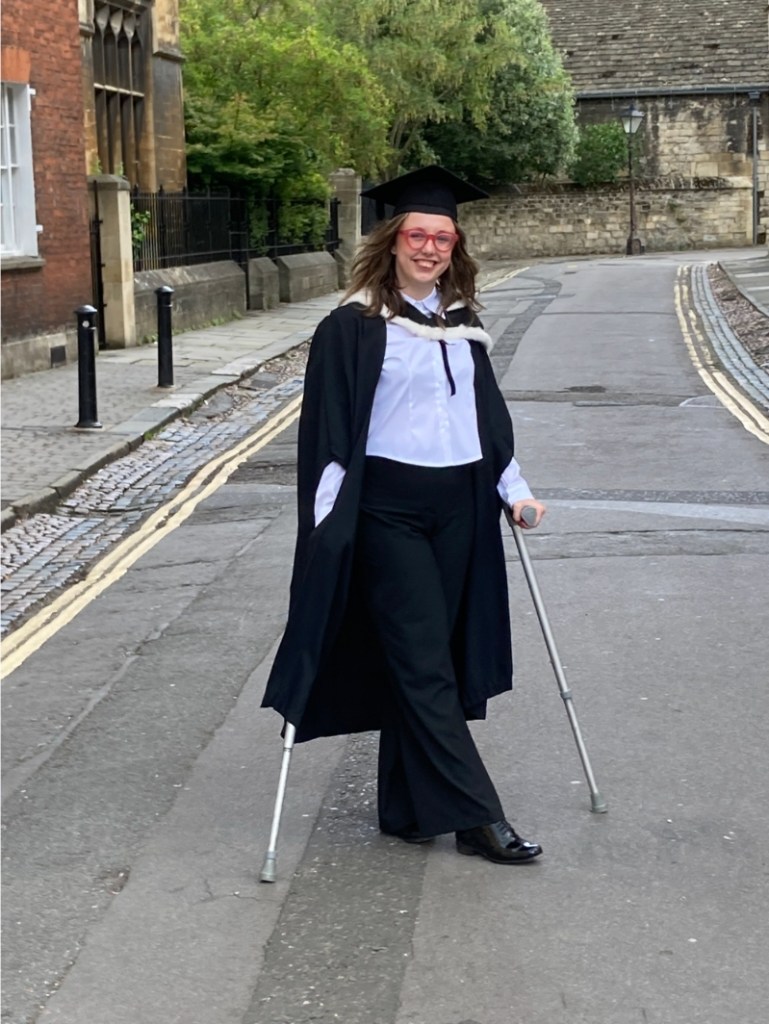
The level of relief I felt when I saw “Second Class, Division One” was like nothing I had ever felt. I then read that my mitigating circumstances notice had been declined: I had made my grade without them being adjusted.
Now, I am working at The Hut Group’s Beauty Division as part of the Leonard Cheshire’s Change 100 Scheme and I could not be happier. If you have the opportunity to do this, I could not recommend it enough for getting experience as a disabled student. Later on, I’m off to London to get started with my Masters, and it feels like things are truly looking up for me.
 labledpodcast.co.uk